
Being Watched
Investigating The Justifications for American Mass Surveillance

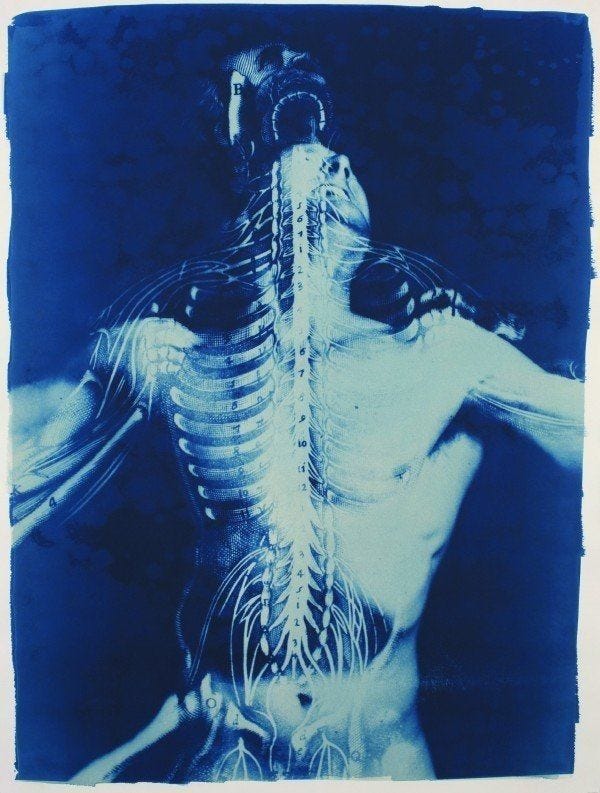
I am being watched.
Going 72mph, through the desert, my eyes burn under the scathing 3 p.m. sunlight beating down on California’s 101. It’s 98 degrees. The sweat sliding down my back turns sticky where my thighs touch the seat. Alone in my car, I can feel the weight of eyes on me.
The tension builds through my furrowed brows and into my scalp. It creeps down the back of my head, seizing at my shoulders. I pull them down my spine, elongating muscles and breathing deeply. Seconds later, they're back at my ears.
It's Sunday. I am a few hours outside of Los Angeles. Since Thursday night, I've been on the road. Los Angeles to Yosemite. Yosemite to Auburn. Now, from Auburn back to Los Angeles.
Nearly a thousand miles I've driven in the last four days. It didn't take long to notice the cameras. Once I started looking for them rather than seeing them, they were everywhere. Even within the haven of our national parks. Lidless, digital eyes watched me with narrowed focus as I drove terrifying highways, carved into a cliff's lip for miles at a time.
SPEEDING KILLS BEARS signs blinking at me in indignant neon the moment the road led me from a barren cliff edge back into the forest.
No shit. I thought to myself. It would be a death wish to crack 35mph on these roads.
The drivers know this. We travel the mountains in packs, never daring to pass, even in the rare legal zones. Occasionally, a car will pull off the front of the pack onto a scenic lookout to let those behind scoot by.
This is no selfless act. It is motivated out of an animalistic desire not to be the first to die if something falls or runs onto the narrow road. A moment to compose yourself on the edge of the world, an ocean of trees and shrubs ready to eat you if you should be lucky enough to be broken against their branches.
In most urbanized places, your dead body would just bloat and rot. Here, at least, you'd feed something.
Still, cameras mark every pressure change of your gas pedal. I wonder idly what the price of speeding is in Yosemite. Because, of course, there is a price. Almost everything is legal if you have enough money, as we’ve seen time and time again from our world leaders.
THAT’S NORMAL, RIGHT?
Having returned to the civilization of urban freeways, my vague paranoia has crystalized into a quiet determination. I will get to the bottom of this.
Cameras, radars, even signs in the desert that read "SPEED LIMIT ENFORCED BY AIRCRAFT." What a superfluous use of tax dollars—hunting people down via plane for going 10 miles over the speed limit.
Two of the Mormons I camped with in Yosemite worked in EMS and air traffic control. They told me that a helicopter ride costs $25,000 base and then $240 for every mile after that.
"After what?" I asked. "After zero?"
"Yeah, and, you know, most of those trips are hundreds of miles." Chandler said morbidly, looking into the fire.
"That's what insurance is for!" Tanner said, sipping a Truly. A self-proclaimed ‘bad mormon.’ Chandler was funnier, but I found Tanner to be kinder and more open.
"Justifying the price gouging life-saving services?"
They nodded and shrugged, a little sheepish at my incredulity.
This conversation fresh in my mind, I wondered: what must all these cameras cost? How can it possibly be worth it?
The Single Most Morbid Philosophical Thought Experiment Has Become Government Infrastructure
The freeways—inappropriately named—have become a real-life panopticon; an endless opportunity for state government to gather data, collect strikes against people, and cash in on drivers who are using their best judgement, and, yes, breaking the law in the privacy of their own vehicles, which they pay handsomely to drive. No harm, no foul, as the idiom goes. Well, what happens when there is profit to be milked from a harmless foul?
Abruptly, an infringement upon citizen’s privacy and God-given right to self-destruction must be infringed upon. In the name of public good, but in the service of mass surveillance and Big Tech. Both of which handsomely support fascism. Shocker.
As Foucault wrote, the beauty of the panopticon is that discipline no longer requires brute force. Internalize surveillance is much more effective. In a prison simulation, such behavioral correction might in fact, be beneficial. However, is it reasonable to ascribe the same criminal intentions to every user of the road? Never mind the cognitive load of being surveilled, is there a valid justification for it?
Do Public Safety Concerns Justify The Use of Mass Surveillance?
Again, the underlying implication is that humans cannot be trusted to act in their own best interest or in the interest of their fellow man. Without that presumption, the entire principle of all these efforts is misplaced: PDF
"The Safe System Approach is founded on the principles that people make mistakes leading to crashes and that the road system should be designed to be as forgiving as possible, so all road users are protected from serious injury or death in the event of a crash."
On the surface, it sounds proactive and forgiving. "People make mistakes." The ultimate human truth.
Now put on your schizo glasses: